

Authenticity
K.J. Page
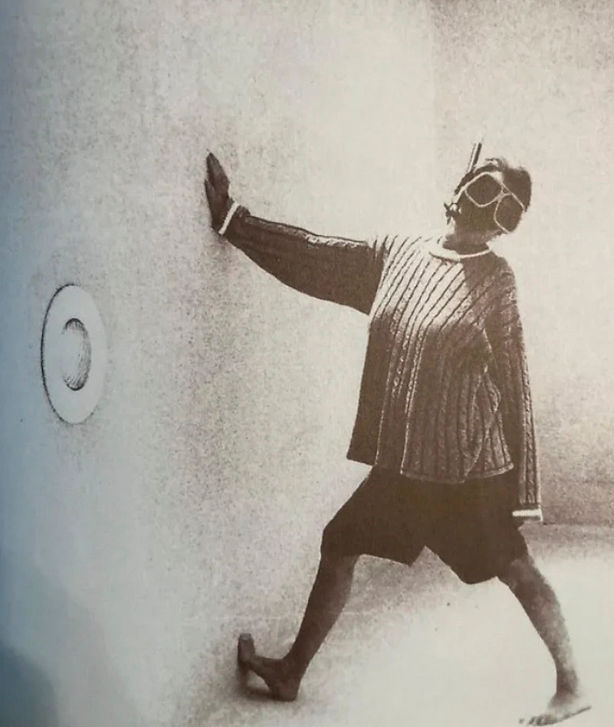
In her annual lecture Diane Seuss advises authenticity: if you have a swimming pool you should write from the swimming pool [1]. Truth will rise as a decomposing frog (I imagine). This touches a nerve. I want you to know that I do not have a swimming pool. In the spirit of DS, I decide to conduct fieldwork in my graveyard instead.
You are so over the graveyard, I know. Mine is not in the right part of town. Its claim to fame is that schoolboy Byron sat there to hone his muse. There is a plaque to say so. Sylvia Townsend Warner does not have a plaque, despite being “the best boy at Harrow” [2]. I like to think I have identified the beech tree which inspired her to write Lolly Willowes. It is now used as a meeting point for drugs and sex, though not by me. My dog once barked in alarm at a couple entwined in the beech’s boughs. Usually she joy-rolls in its leaves.
Another lecture. This one is about STW listing her trousseau of household objects, ordering her paraphernalia to declare queer domestic bliss [3]. We are what we gather around us. Sometime later STW unpicks her hand-sewn initials from the napkins when Valentine Warner moves a lover into Miss Green’s Cottage. The audience gasp: who has not effaced themselves in the struggle to be loved.
Another swimming pool. This one is empty with Romany Eveleigh standing at the bottom wearing a snorkel mask [4]. So dominant is this image online, it takes a while for Google to find RE’s face. I have a habit of falling for women I cannot see. As instructed, I look instead at the repetition of mottled tiles above the tension of her pointing foot.
I book a pack of six therapy sessions to find out why I hoard my breath. The results are familiar. I start writing about a headless swan but let her drift away. As RE says, the trick is to catch the thought before you get out of bed, after that it’s not worth holding on (I paraphrase). Better to face the confines of one’s own experience [5].
I would like RE to meet Agnes Martin in the desert. This is not so very far-fetched. In the desert they could sit together and contemplate the coachwhips shedding skin. Repetition reveals form. A grid is a place to lose things. Alice Oswald is poet and she prefers rivers to deserts as a way of losing face [6]. AO says look to your character, your character will smell [7]. Even when you write about the thing least like yourself.
References
1. Diane Seuss, Burlesque Picaresque in the Rural Midwest: My Education in Poetry https://poetrysociety.org.uk/projects/the-poetry-society-annual-lecture/ Response in the Q&A.
2. Claire Harman, Sylvia Townsend Warner – A Biography (Penguin Books 2015), p.20.
3. Harriet Baker, Sylvia Townsend Warner’s Old Teapot: Archives, Objects and Life-Writing https://townsendwarner.com/the-2025-sylvia-townsend-warner-lecture.
4. Romany Eveleigh, https://www.newexhibitions.com/artist/2327.
5. Romany Eveleigh, Prologue to what is possible, International Artist’s Magazine N.S.
Vol 1. No 1-2, January 1990.
6. Alice Oswald, Falling Awake (Cape Poetry, 2016), p.6 Severed Head Floating Downriver.
7. Alice Oswald, The Art of Poetry N.119, Paris Review Winter 2025.
K.J. Page is a writer based in London, most recently published in The Hyperbolic Review. They write about art, maths and houses full of queer spiders.


